Many homeowners are unaware of what lurks behind their walls and attic floors. When it comes to insulation, identifying what’s there isn’t just about energy bills; it’s about safety. Understanding how to tell the difference between cellulose and asbestos insulation can make the difference between a simple upgrade and a serious health concern. This guide delivers clear, actionable insights no jargon, just smart, practical advice.
The Green Guardian of Modern Homes
Cellulose insulation is loved for its eco-friendly credentials. Crafted primarily from recycled paper and treated to resist fire, it forms a dense, protective layer in attics and wall cavities. If you encounter a soft, greyish substance that resembles shredded newsprint, it’s probably cellulose blown-in insulation. This option is common in renovations and modern builds due to its affordability and sustainability.
Is Cellulose Insulation Safe? Understanding the Facts
Many ask, is cellulose insulation safe for families and pets? Because it’s made from plant fibres and treated with non-toxic fire retardants, it’s considered a low-risk, sustainable choice. It contains no fibreglass shards, and as long as it remains dry, it doesn’t foster mould. This makes cellulose insulation a favourite among those seeking healthy homes.
What Is Cellulose Insulation Made Of? Breaking Down the Ingredients
If you’re still unsure, consider this: what is cellulose insulation made of? The answer is simple—mostly recycled newspaper, with mineral-based additives to deter pests and flames. This fibre-rich blend creates a fluffy texture that’s easy to spot and touch.
Blown Cellulose Insulation: Installation Clues and Visual Cues
When contractors use machines to spray material into attics or walls, that’s blown cellulose insulation. Look for even coverage, a slightly lumpy appearance, and a soft, paper-like feel. If you see insulation settling over time, it’s a sign of blown-in cellulose insulation, not asbestos.
How to Tell the Difference Between Cellulose and Asbestos Insulation: Key Detection Methods
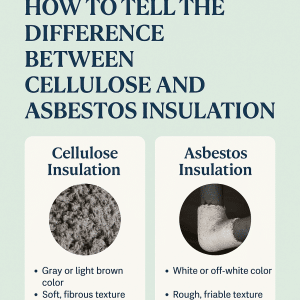
The main challenge now is how to detect the difference between cellulose and asbestos insulation. Here are distinct markers to help you separate the safe from the dangerous:
Colour and Texture: Cellulose is grey and fluffy, while asbestos is usually white, blue, or grey and often appears in compact, pellet, or loose-fill forms.
Location and Age: Homes built before the 1980s are prime candidates for asbestos, especially if the material looks old and brittle.
Touch Test: Cellulose feels like soft paper pulp, but asbestos feels rough and can be crumbly or pebble-like.
Label Check: Newer insulation often has documentation or tags. Absence of labels in older properties should raise caution.
Professional Testing: If in doubt, call a certified inspector. Only lab tests can confirm asbestos with certainty.
Blown-in Cellulose Insulation: Modern Methods, Minimal Worry
Today’s installers favour blow-in cellulose insulation for its speed and safety. If your attic insulation looks recently installed and has no harsh fibres, it’s likely cellulose. This modern approach rarely appears in homes built before the 1980s.
Fibreglass vs Cellulose Insulation: Spotting the Differences
People often confuse fibreglass with cellulose. When comparing fibreglass vs cellulose insulation, remember: fibreglass is pink, yellow, or white and has a wiry, itchy texture. Cellulose insulation is always softer and greyer and never contains glass strands.
Cellulose Insulation R-Value: Performance Without the Risk
Another benefit of cellulose is its performance. The cellulose insulation r-value outperforms many alternatives, offering effective thermal resistance without health hazards. No asbestos-based product can match this modern safety record.
Cellulose Insulation UK: A Safer Standard
Across the pond, Cellulose Insulation UK stands for quality. Strict regulations ensure no asbestos contamination, and all materials must pass rigorous safety checks. If you’re in the UK and see grey, fluffy insulation, odds are it’s safe, modern, and cellulose-based.
What Is Cellulose Insulation? A Simple Explanation
For newcomers, what is cellulose insulation? It’s an eco-friendly, plant-based product designed for easy installation and peace of mind. Its natural composition is immediately recognisable and stands in stark contrast to hazardous older materials.
Five Critical Signs to Help Identify Insulation Types
Grey, soft, and fluffy? Most likely cellulose, not asbestos.
Installed after 1990? Odds favour cellulose insulation over asbestos.
No itching after touch? Cellulose is gentle; asbestos is irritating.
Found in a bag with a label or with documents? Modern cellulose insulation is well documented.
Crumbly, white or blue, and very old? This could be asbestos call a professional.
Removing Asbestos: A Job for Experts
If you suspect asbestos, never attempt to remove it yourself. The fibres are dangerous when airborne. Always hire licensed professionals for safe assessment and removal. When in doubt, remember: knowing how to tell the difference between cellulose and asbestos insulation can protect your health and your investment.
Why Does Accurate Identification Matter?
Misidentifying insulation can lead to costly mistakes or even health risks. By knowing how to tell the difference between cellulose and asbestos insulation, you’re taking control of your family’s safety. You’ll also avoid unnecessary expenses and enjoy greater peace of mind.
FAQs
What is cellulose insulation, and how does it differ from older materials?
Cellulose insulation is made from recycled paper and treated for fire resistance, unlike hazardous asbestos.
Is cellulose insulation safe for residential use?
Yes, whether cellulose insulation is safe is a common concern; it’s considered low-risk and non-toxic compared to asbestos.
What clues suggest you have cellulose blown-in insulation?
Cellulose blown-in insulation appears grey and fluffy and is soft to the touch, never harsh or brittle.
How do you compare fibreglass vs cellulose insulation visually?
When comparing fibreglass vs cellulose insulation, fibreglass looks pink or yellow and is wiry, while cellulose remains grey and cottony.
What is the cellulose insulation R-value advantage?
Cellulose insulation’s R-value offers strong thermal resistance, providing better energy efficiency than many older products.
How can you distinguish blown-in cellulose insulation from asbestos?
Blown-in cellulose insulation settles evenly, feels like shredded paper, and usually lacks any sharp or glass-like fibres.
What’s unique about cellulose insulation UK standards?
Cellulose insulation in the UK is regulated for safety, ensuring no asbestos contamination in modern products.